Why Digital Simulation Is Becoming Central to Clinical Skills Training in Healthcare Education
As healthcare programs face growing pressure to improve clinical readiness without expanding contact hours, attention is increasingly turning to how clinical skills are developed.
Healthcare simulation has become a critical part of this conversation. But despite the growing adoption of digital simulation and simulation-based learning models, the most effective programs are not moving toward fully digital delivery. Instead, they are building blended approaches that combine digital simulation with structured, faculty-led teaching.
This shift reflects a broader trend across education systems. The OECD’s Digital Education Outlook (2023) emphasizes that digital tools deliver the most value when they reinforce existing educational pathways rather than operate as standalone or disruptive interventions.
In healthcare education, that principle matters. Clinical competence is cumulative, contextual, and human. This article explores why digital simulation is becoming central to blended clinical skills development and why integration matters more than innovation alone.
Why Clinical Skills Development Needs More Than Exposure
Clinical skills are rarely limited by theoretical understanding alone. More often, challenges emerge around:
- sequencing multi-step procedures correctly
- recognizing clinical decision points under pressure
- translating theoretical knowledge into real-time action
- sustaining performance confidence in unfamiliar environments
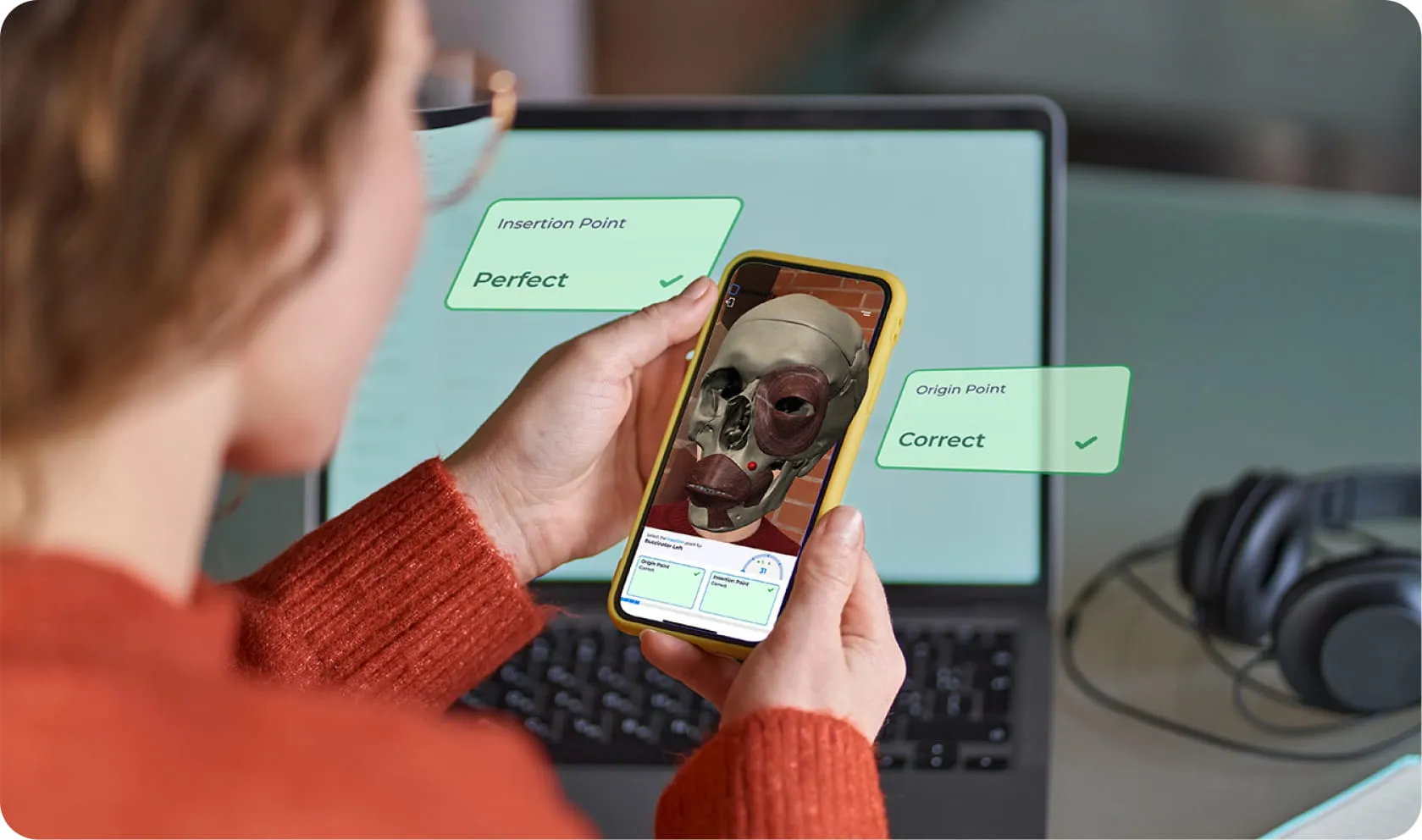
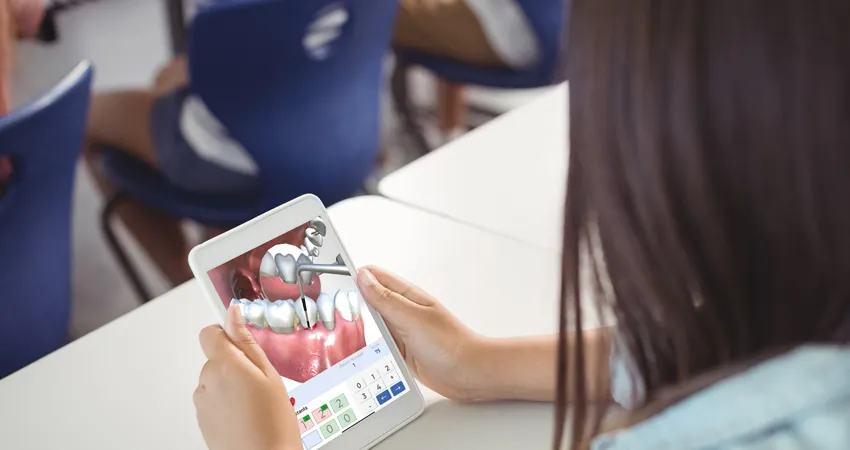
Simulation-based learning directly addresses these challenges by allowing learners to practice skills repeatedly, without risk to patients—and without requiring additional simulation lab time.
By extending practice beyond scheduled sessions, simulation enables learners to rehearse procedures, decision points, and workflows as often as needed, rather than only when physical space, equipment, or supervision is available.
This accessibility matters. When learners can engage with skills practice independently and ahead of high-stakes environments, anxiety is reduced and confidence is built more gradually.
A 2024 review published in the Journal of Medical Internet Research found that simulation technologies, including virtual and augmented reality, are associated with reduced anxiety and improved confidence across nursing, dentistry, and medical education.
But exposure alone is not enough.
When simulation sits outside the curriculum or appears only episodically, it risks becoming an isolated experience rather than a developmental one. Clinical skills mature through progression, repetition, and feedback requiring integration , not add-ons.
More on healthcare simulation I CPR Manikins, Training Tools, and Digital Simulation: A Life Support Coordinator Q&A
How Digital Simulation Supports Skill Progression
Digital simulation play a distinct role in modern healthcare education by enabling:
- structured, repeatable practice beyond scheduled contact hours
- visual walkthroughs of anatomy and procedural sequences
- low-risk environments that support trial, error, and feedback
- consistent exposure to core skills across large cohorts
These capabilities are particularly valuable in areas where access to labs, equipment, or supervision is limited.
However, research consistently shows that digital tools are most effective when embedded within existing curricula.
A 2025 study published by Springer reported measurable learning gains associated with digital learning tools, noting that outcomes were strongest when these tools complemented traditional instruction rather than replaced it.
In other words, simulation strengthens clinical skills when it reinforces faculty-led teaching.
The Enduring Role of Faculty in Simulation-Based Learning
While healthcare simulation can replicate environments and procedures, it cannot replace the human elements central to healthcare practice.
Faculty remain essential for:
- contextualizing technical skills
- modeling professional judgment, particularly in structured clinical decision-making under pressure (e.g., ABCDE assessments)
- supporting reflective learning
- developing communication, empathy, and ethical reasoning
These dimensions of practice are foundational to patient-centered care and cannot be fully taught through technology alone. Real-world interaction with educators and peers provides the social, professional, and ethical grounding that clinical competence requires.
“Simulation builds technical confidence. Faculty build professional confidence.”
Adopting Digital Simulation for Healthcare Education
Institutions that adopt simulation-based learning most successfully tend to focus less on technology acquisition and more on curriculum design and well-planned integration. Key considerations include:
- identifying where simulation adds the most value in the learning journey
- aligning simulation activities with defined clinical learning outcomes
- determining which skills benefit from repeated digital practice
- supporting faculty in integrating simulation into existing teaching models
This blended approach allows healthcare education programs to meet learner expectations for interactive, flexible learning while preserving the structure, guidance, and accountability that clinical education demands.
The Key Takeaway: Digital Simulation Strengthens Clinical Skills
The adoption of digital simulation across healthcare is reshaping how clinical skills are taught, practiced, and assessed. However, its impact is greatest when it operates as part of a blended model that combines digital tools with strong faculty engagement.
For healthcare education leaders, the future lies not in choosing between digital and traditional teaching, but in designing learning experiences where simulation supports skill development, confidence, and clinical readiness at scale.
TL;DR: Why Blended Simulation Works
- Clinical readiness depends on how skills are developed, not just where they are taught
- Digital simulation is most effective when it supports progression, repetition, and application
- Digital simulation enables low-risk, repeatable practice and consistent preparation
- Faculty remain essential for judgment, reflection, communication, and professional formation
- Blended models outperform fully digital or purely traditional approaches
If you’re exploring how immersive simulation can be integrated into your curriculum or training programmes, we’d be happy to walk you through how it works in practice.
This article was reviewed for clinical accuracy and educational relevance by Hilary Gupte (BSc, PGCE), a registered nurse and experienced clinical educator.

Join our mailing list
Get the latest updates on immersive learning, industry trends, and resources delivered straight to your inbox.