Dental Student Confidence Isn’t the Same as Readiness: What Institutions Should Measure Next

Across U.S. dental programs, student confidence scores remain high. Most learners say they feel prepared, capable, and broadly satisfied with their education.
But confidence alone doesn’t tell the full story.
Data from The Modern Dental Student 2025 Report (a U.S.-wide survey of 348 dental students conducted by Immersify) reveals a clear confidence paradox. Students often feel confident overall, while simultaneously reporting gaps in hands-on practice, access to modern learning tools, and readiness for real clinical scenarios.
In other words: confidence and readiness are not the same thing.
"Confidence is an important signal. It is not, on its own, a proxy for readiness."
For dental schools, this raises a critical question:
What should institutions measure beyond confidence to ensure graduates are genuinely prepared for practice?
Why Confidence Can Mask Structural Gaps in Dental Education
Self-reported confidence is familiar territory in healthcare education. It’s easy to collect, easy to benchmark, and reassuring when scores are high.
But recent education research consistently shows that confidence does not always align with competence, especially when learning environments are fragmented.
Large-scale reviews of immersive and digital learning in healthcare education highlight a recurring pattern: students report stronger understanding and skill transfer when learning is applied, interactive, and repeatable, rather than purely instructional.
An umbrella review published in Frontiers in Digital Health (2024) examined VR and AR across healthcare education and found that immersive approaches consistently support:
► deeper conceptual understanding
► improved procedural performance
► stronger transfer into real-world tasks
Similarly, a JMIR Medical Education study (2023) found that immersive and interactive tools are most effective when they complement existing curricula, rather than sitting outside it as optional extras.
This helps contextualise what students told us in the Modern Dental Student Report.
Many learners described feeling personally confident, yet still relying heavily on:
► YouTube walkthroughs
► flashcard apps
► AI tools
► peer explanations
Not because they prefer them, but because they fill gaps left by the formal curriculum.
Confidence, in these cases, reflects student adaptability rather than institutional readiness.
What the Modern Dental Student Report Reveals Beneath the Surface
When we looked beyond headline satisfaction scores, a more nuanced picture emerged.
Students frequently told us:
they wanted more opportunities for low-stakes, repeatable practice
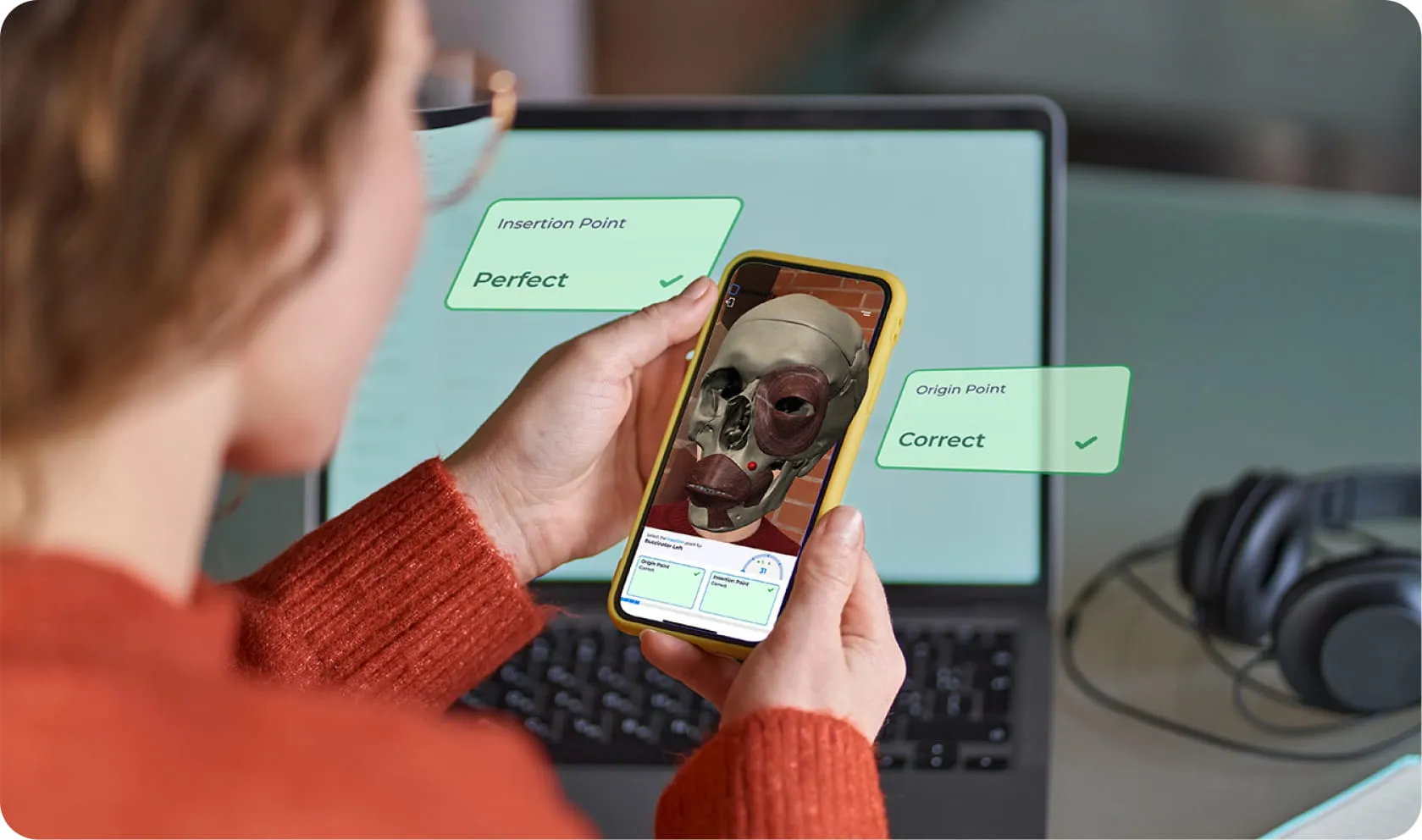
▶ they struggled to visualize anatomy and procedures before clinic
▶ they felt confident in theory, but less certain applying knowledge under pressure
This is the confidence paradox in action.
Students are resilient. They find workarounds. But those workarounds create uneven preparation across cohorts, making readiness harder to assure at an institutional level.
MORE ON STUDENT CONFIDENCE AND CLINICAL READINESS
The Institutional Risk of Relying on Satisfaction Alone
High satisfaction scores are reassuring but they’re also blunt.
Both our survey data and national datasets (including ADEA Trends in Dental Education 2024–25) show that students increasingly supplement formal education with external tools. While this demonstrates initiative, it introduces real risks:
- inconsistent quality of learning materials
- misalignment with curriculum outcomes
- increased cognitive load before clinic
- reduced visibility for faculty into how students are actually preparing
The risk isn’t dissatisfaction.
It’s invisible misalignment.
When preparation happens outside institutionally endorsed systems, confidence can look high while readiness quietly diverges.
What Dental Schools Should Measure Next
To complement confidence and satisfaction metrics, institutions may benefit from tracking indicators that better reflect application and preparedness.
1. Consistency of preparation
Are students using shared, curriculum-aligned resources — or assembling their own patchwork of tools?
2. Frequency of applied practice
How often do learners engage in scenario-based or procedural practice before clinic, not just content review?
3. Early-stage learning bottlenecks
Where do students repeatedly struggle in pre-clinical years, and how early are those signals detected?
4. Contextual confidence
Confidence measured at the task or scenario level (e.g. specific procedures) is often more revealing than general self-assurance.
5. Cognitive load indicators
Human factors research shows performance improves when unnecessary cognitive effort is reduced. Tracking friction points in learning workflows can highlight where design, not ability, is the issue.
6. External resource dependence
Understanding why students turn to external tools can inform smarter institutional adoption rather than reactive bans.
SEE HOW UCLA INTEGRATED SIMULATION INTO THEIR CURRICULUM | Enhancing Dental Education with Immersify: A Case Study from UCLA on Improving Student Clinical Performance
Where Immersive Learning Fits When Done Properly
Across healthcare education, immersive learning technologies are consistently associated with improved retention, application, and confidence when they are embedded, not bolted on.
The evidence is clear: immersive tools work best when they are:
✔ curriculum-mapped
✔ faculty-endorsed
✔ used before high-stakes clinical exposure
For dental education, this means supporting:
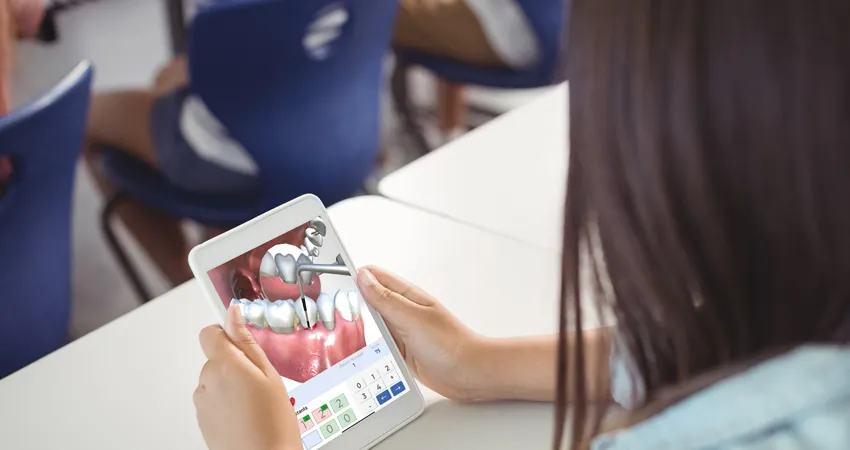
✔ repeated, low-risk procedural practice
✔ shared preparation standards across cohorts
✔clearer insight into learner progression
✔ reduced reliance on unvetted external content
The goal isn’t to replace existing teaching.
It’s to ensure that confidence is built on common foundations — not individual workaround strategies.
TL;DR: What Dental Schools Should Take From This
- High student confidence does not automatically indicate clinical readiness.
- Data from The Modern Dental Student 2025 Report shows confidence often coexists with unmet needs in hands-on practice, learning tools, and early preparedness.
- When students rely on external resources to bridge gaps, readiness becomes uneven and difficult to assure across cohorts.
- Measuring readiness requires going beyond satisfaction scores to track applied practice, consistency of preparation, contextual confidence, and cognitive load.
- Immersive, curriculum-aligned learning tools can help institutions build confidence on shared foundations, rather than individual workaround strategies.
This article was reviewed for clinical accuracy and educational relevance by Dr. Martin Ling, a GDC-registered dentist and Fellow of the Higher Education Academy.

Join our mailing list
Get the latest updates on immersive learning, industry trends, and resources delivered straight to your inbox.