Branded Simulation: Enhancing Awareness and Boosting Educational Outcomes
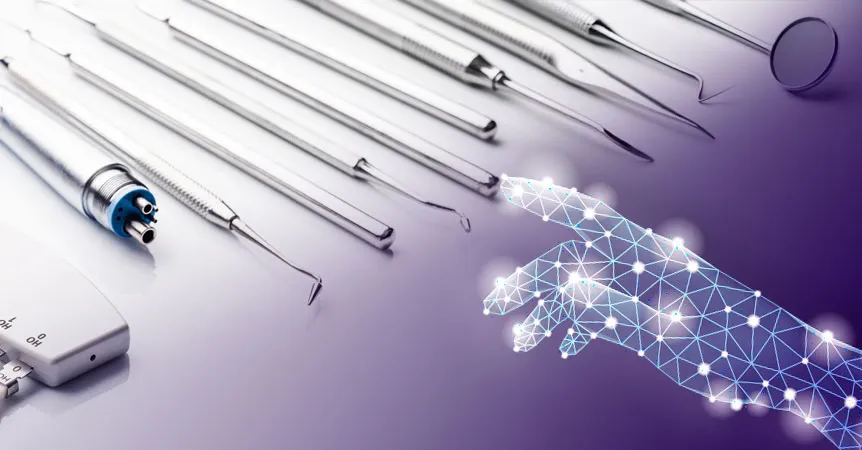
As digital simulation-based learning becomes a more prominent feature of dental education (and of healthcare education more broadly), students are spending more time working with digital representations of the materials and instruments they'll eventually use in practice.
For universities and dental schools, this shift holds plenty of pedagogical benefits. But it also opens up an easy-to-overlook opportunity for manufacturers of instruments, materials, equipment, patient products, new technology, and software to play a more visible and constructive role in clinical training.
In this post, we explore how the thoughtful integration of real-world, branded products into digital simulations can enhance learning experiences and position brands for long-term clinician trust.
Read on to discover:
- Why simulation fidelity (the realism and authenticity of a learning experience) is a key factor in student engagement and skill development.
- How branded products, when integrated appropriately into simulation environments, represent a legitimate and valuable form of fidelity.
- How familiarity and trust can further enhance learning outcomes by reducing students' cognitive loads at crucial moments during their studies.
- What these factors mean for dental brands looking to connect with future clinicians through meaningful, teaching-aligned brand visibility.
 Why is Simulation Fidelity a Driver of Learning?
For simulation-based learning to deliver on its potential, the simple fact is that it needs to feel clinically relevant. The closer a simulation comes to replicating the products, sequences, and settings learners are likely to encounter in practice, the more it can support meaningful preparation.
In that light, introducing industry products into screen-based simulation can facilitate stronger learning experiences by increasing the realism of those experiences. And to understand why this matters (not just in educational terms, but in relation to the priorities of dental product providers), we need to clarify what fidelity really means.
Simulation Fidelity Explained
In simulation, fidelity and realism boil down to how faithfully the simulation reflects real-world tasks and tools.
That’s why a well-designed screen-based simulation can sometimes offer more pedagogical value than a generic physical one. This is a point raised in an article published by the National Center for Biotechnology Information, which hammers the point home by noting that fidelity is independent of simulation modality.
The authors feel the need to make this clarification because high-fidelity simulation can often be conflated with a specific mode of simulation (often the more sophisticated lines of physical models and manikins). But, as the authors imply, a tablet-based or AR simulation can offer higher realism than a phantom head, depending on how closely it replicates the products, actions, and clinical logic learners will use in practice.
SEE A PRODUCT COMPANY SIMULATION IN ACTION | ‘Simulation Spotlight: Local Anesthetic in Dental Education Q&A’
How Do High-Fidelity Simulations Impact the Learning Experience?
To get a sense of fidelity’s value, you need look no further than a key second-order meta-analysis published by the American Educational Research Association.
This study found that simulation-based learning in higher education reliably produces positive outcomes, and that simulations ‘with an overall high authenticity do have greater effects than simulations with a lower authenticity.’
In a nutshell: the degree of realism matters, regardless of the medium. And, of course, the realism involved in dental simulations encompasses the simulated equipment and materials that students are challenged to use in those scenarios.
Frequently Asked Questions
Fidelity refers to how closely a simulation mirrors real-world clinical tasks, tools, and environments. High-fidelity simulations aim for greater realism to support more effective learning.
High-fidelity simulations can help learners build confidence and competence by offering more authentic practice opportunities that align with clinical expectations.
Yes. Fidelity isn’t about the medium, but the realism conveyed through it. A well-designed digital or AR simulation can offer higher fidelity than a physical one if it closely replicates clinical tools and workflows.
What Simulation Fidelity Means for Dental Brands
For dental brands, there's a clear opportunity here. By contributing accurate, recognizable products to digital simulations, you’re gaining visibility in the competitive dental devices market and helping educators deliver stronger, higher-fidelity learning experiences.
In effect, this means product brands are in a position to offer future clinicians safe, repeatable, and scalable access to real-world dental products and, by extension, help these cohorts become more effective practitioners by better bridging the gap between learning and doing.
TRAINING YOUR TEAM MATTERS, TOO | ‘Product Knowledge Training Is Under Pressure. Here’s How Gamified Digital Simulations Can Help’
How Familiarity Builds Clinical Confidence and Brand Trust
If fidelity is all about making a simulation feel real, familiarity is what makes that realism last.
Once students begin encountering brand-specific products in digital lessons and AR environments, this repeated exposure can quickly foster a form of familiarity that can shape their preferences and bolster educational outcomes.
What’s the Connection Between Familiarity and Product Preference?
There’s a well-established link between repeat encounters and heightened trust, stretching back as far as 1968.
In that year, work by Robert Zajonc identified the ‘mere exposure effect’. This is the principle that repeated encounters with a neutral stimulus (even something as unusual as an anonymous student sitting in a large black bag!) tend to increase trust and positive association over time.
This is a principle that’s just as applicable to clinical education as it is to consumer psychology. More so, in fact, when we replace the large black bag with genuinely useful equipment students are likely to use and encounter in practical settings.
In short: when that repeat exposure helps students understand and engage with complex topics, that journey from repeat encounters to trust is only going to accelerate.
DISCOVER THE RESEARCH-BACKED LEARNING BENEFITS OF SIMULATED RESOURCES | 'How Immersify’s Simulation-Based Learning Transformed UCLA Dental Students Into Trusted Prescribers'
How Familiar Equipment and Materials Help to Maintain Cognitive Loads
Clearly, a buildup of trust and preference among potential future customers has plenty of commercial advantages for brands. But that’s not the whole story.
In fact, clinical human factors research suggests that performance improves when clinicians aren’t forced to expend unnecessary mental effort navigating unfamiliar or poorly integrated systems and tools (Privitera, 2020). And, for dental students, it's fair to assume that this principle is likely to hold true during those all-important hands-on exams as their clinical skills are tested.
This is where branded simulation comes into play. When students have been practicing with digitally simulated products that closely mirror the real-life equipment and materials they're presented with in hands-on assessments, they're going to have total familiarity with every aspect of the equipment they use. By the same token, they'll avoid the extra mental effort involved in navigating unfamiliar terrain, allowing them to focus more fully on technique and decision-making.
This is especially true when they’ve explored detailed 3D representations that show, for example, how specific blade angles influence the way a tool should be used. Without a foundation that uses real-world equipment, they risk getting distracted in exams by tools they’ve had less opportunity to encounter.
FIND OUT WHY STUDENTS AND EDUCATORS NEED FIRST-CLASS LEARNING TECH | '5 Key Takeaways from "Beyond the Buzzword: Rethinking Technology as a Catalyst for Curriculum Transformation"'
Branded Simulations: A Win-Win for Institutions and Dental Product Brands
For institutions, these factors mean graduating clinicians who are both competent and, crucially, comfortable using the tools they’re most likely to encounter in real-world settings.
For brands contributing to these learning environments, the value is just as clear. Not only are you gaining valuable awareness among prospective buyers, but you’re also helping build stronger, more capable future clinicians.
 Why Digital Learning Platforms Are Becoming Key Dental Marketing Products
For those selling products to higher education institutions (including clinical and dental tools) digital learning platforms have become a vital visibility channel. After all, the most formative product experiences happen in the classroom, not the clinic.
In fact, at Immersify, we’ve found that product-focused lessons and simulations featuring interactive 3D assets have ranked among the most engaged-with activities among student: learners are actively choosing to spend time with their tools.
For brands, there's clearly an opportunity to boost awareness here. But beyond that, branded simulation is a chance to:
- Support better education
- Build early trust
- Position your products as go-to options for the next generation of clinicians
DISCOVER WHY NEXT-GEN EDTECH PLATFORMS ARE BECOMING ESSENTIAL | ‘How Education 4.0 is Transforming Healthcare Learning’
TL;DR: Learning Tools Are Branding Tools
- Brand-specific products can enhance learning by improving simulation fidelity and reducing cognitive load.
- Familiarity drives student confidence and shapes long-term preferences through repeated, meaningful use.
- Immersive learning platforms are now dental marketing products, offering a strategic opportunity for dental brands to support better education and build trust with future clinicians: a clear advantage in the dental products market.
Looking to Bring Clinically Relevant Products Into Immersive Training Environments?
Reach out to Immersify’s expert team today to discuss how your product can enhance learning experiences for the next generation of clinicians.

Join our mailing list
Get the latest updates on immersive learning, industry trends, and resources delivered straight to your inbox.